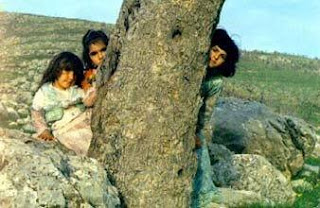
A 14 year old Kurdish girl Ceylan Onkol was tending her sheep in a Kurdish village on the outskirts of Amed (Diyarbakir). She was hit by a missile or shell fired from a Turkish Military (TSK) garrison. She was hit in the groin area and blown into pieces. The public prosecutor didn't go to the area, neither did a doctor. It was a complete cover up of terrorism against children in Kurdistan, terrorism by the TSK.
Whenever the fascist state tries to protect its terrorists it uses the excuse of "the investigations are underway". How do you conduct investigations without following proper procedures beats me but that's another story. We want to high light something else. We want to know how many of the Turkish state terrorists have ended up behind bars because they torture and kill even children. Do you know what happened to the police officers who broke Cuneyt Ertus' arm? What happened to those who were captured in Şirnex (Şirnak) while planting bombs to kill civilians? What happened to TSK terrorist Col. Cemal Temizöz? Col. Temizöz is on trial for hundreds of extra judicial killings and torturing civilians. The prosecutor is asking for multiple times of life time sentences for him but guess what? He is still on duty.
We remember the Uğur Kaymaz incident. On Sunday 21 November 2004 a 12 year old Kurdish boy was killed by police officers. He was shot multiple times at point blank range from his back. On 18 June 2009, the High Tribunal Court ruled that the police who shot Ugur from his back have acted in self defence. The police chief Kemal Dönmez who was involved in murdering of Uğur Kaymaz was promoted. Kemal Dönmez was promoted despite his known ties to the Ergenekon terror organization of the terrorist state.
So, really, what happens after these investigations? These terrorists continue their jobs and receive promotions.
Before you try to talk about legitimacy of a terrorist state and blame the existence of Kurdish freedom fighters to justify the terrorist actions of the Turkish state, I recommend you read about the Dersim genocide and the Zilan massacre. Both of these happened way before the Kurdish freedom fighters were around.
Put yourself into the shoes of the family members or friends of those children and then answer this. Do you understand why Kurdish defence forces exist?
Showing posts with label State Terror. Show all posts
Showing posts with label State Terror. Show all posts
Sunday, 4 October 2009

Friday, 17 July 2009
Newspaper Confiscated for Reporting Allegations of Police Rape
Court ordered confiscation of Azadîya Welat newspaper because it reported 10 claims of women being raped by the police in Amed since the arrival of new police chief to the city. The full story is here.
Kurds not only are not allowed to defend themselves they also cannot talk about the crimes committed against them by the fascist state's security forces. I am curious as to what happened to the animal who smashed a zarokê roj's head with the butt of his weapon or the thug who broke Cuneyt Ertus' arm. Perhaps it's time Kurds should assume the state's role in delivering justice since state doesn't seem to be capable of it.
Kurds not only are not allowed to defend themselves they also cannot talk about the crimes committed against them by the fascist state's security forces. I am curious as to what happened to the animal who smashed a zarokê roj's head with the butt of his weapon or the thug who broke Cuneyt Ertus' arm. Perhaps it's time Kurds should assume the state's role in delivering justice since state doesn't seem to be capable of it.
Saturday, 20 June 2009
High Tribunal Court Approves of Killing Kurdish Children
 On Sunday 21 November 2004 Ugur Kaymaz, a 12 years old child, was helping his father loading his lorry when the police shot both of them dead. His father was gunned down with 8 bullets. Ugur had 13 bullets in his body. The child was repeatedly shot from his back at very close range. Nine bullets entered his little body through his back. The fact that Ugur was shot from very close range was documented by forensics doctors of the Judiciary.
On 18 June 2009, the High Trubinal Court ruled that the police who shot Ugur from his back together with his father have acted in self defense. How is it acting in self defense, let alone being justifiable by any means, to shoot a child from behind at close range with 13 bullets? What kind of "law" would allow and tolerate such abomination?
Think again... Is PKK really a terrorist organization? Don't you think the real terrorist is the Turkish state that shoots Kurdish children from behind, breaks their arms, smashes their skulls with butt of a weapon, tries and imprisons them as adults, AND sees such abomination justifiable?
The Turkish state is determined that it will either assimilate Kurdish children or annihilate them.
I have a question for those people who insist the PKK should lay down arms unconditionally. Are they willing to protect these children if the Kurdish defence forces lay down their arms? I didn't think so.
Friday, 19 June 2009
More DTP Members Detained
While the Terrorist Turkish State and its supporters keep insisting the PKK should lay down arms and Kurds should "seek for their rights in parliament" the party of Kurds is under constant attack. I suppose what the fascist state and its supporters are saying to Kurds is "seek for your rights from the prisons". 19 More DTP members were detained on 18 June 2009. The full story is in Bianet:
The AKPasha Inc (which is having yet another crisis these says) is keeping on detaining key DTP figures. They are going to have to build more prisons because the ranks are being filled as we speak. Each time pashas and mullahs have a problem in their marriage, they attack Kurds. I say it's enough, Kurds shouldn't save the day for these thugs anymore.On 14 April, members of the pro-Kurdish Democratic Society Party (DTP) were taken into custody. Since then, around 500 party members have been taken into custody and 267 have been arrested.
During operations in the provinces of Diyarbakır, Şırnak, Bitlis, Batman and Mardin, all in the southeast of Turkey on 17 June, 19 people were taken into police custody. Among them are municipal officials and academics.
Wednesday, 10 June 2009
State Disciplines Kurdish Children in Prison
Turkey has found a way to educate the Kurdish children. Zaroken Roj (The Children of Sun) are now being educated and disciplined in the prisons. They are tried as adults and subjected to adult sentences. Then the Turkish State and it's brain washed servants wonder why in the earth Kurds still won't feel as part of the state. Afterall the present Turkish state is a terrosit state and Kurds don't condone terrorism. The following article written on 22 April 2009, recently appreaded in Bianet.
[...]My previous post contained the following in it:
The judges Menderes Yılmaz, Selahaddin Menteş and Ömer Adil Küçük hand down the sentences. Three children are convicted of "taking part in activities in the name of a terrorist organisation without being members of the organisation." This means they receive a sentence "as if" they were members: 6 years 11 months. Another child is also accused of spreading organisational propaganda and violating the law on demonstrations, leading to a sentence of 7 years and 5 months. The two children tried without detention receive a 10-month sentence each for violating the law on demonstrations. This is converted into a fine.
[..]
"Terrorism" and children
According to Article 250 of the Criminal Procedure Code, ratified in 2004, the State Security Courts were abolished and replaced by heavy penal courts with special authorities. These courts would deal with certain crimes. When the Anti-Terrorism Law was amended in June 2006, these special courts were given the authority to try children aged over 15 for crimes defined by this law.
An amendment to Article 13 of the Anti-Terrorism Law meant that sentences handed down to children aged over 15 could not be converted into other punishments or suspended. This meant that the Anti-Terrorism Law and the Criminal Procedure Code started treating children over 15 years old not as children, but allowing their trial and punishment just like adults.
Diyarbakır laws
When, after Öcalan's capture in 1999, fighting stopped, the ruling Justice and Development Party (AKP), which came to power in 2002, seemed to offer a solution to the Kurdish question with a series of reforms aimed at attaining membership in the European Union through democraticisation. However, by 2006, the government seemed to have taken steps backwards even from those limited reforms. It had become clear that it would not make any efforts in the recognition of the Kurdish question or in a discussion of a solution with Kurds.
The changes in the Anti-Terrorism Law came after events in Diyarbakır on 28 March 2006, when the police started shooting into a crowd of thousands of people in a funeral procession for four PKK members. Within five days, ten people died, five of them children. Hundreds of people were taken into custody.
When MPs discussed allowing the trial of 15 to 18-year-olds as adults, they assumed that they could prevent them from joining the PKK. The expected reforms from the government did not happen, and it was clear that it would turn to violence, not sparing children.
Hundreds of children detained, tried, convicted
And this is what happened. Answering the motion of DTP MP Selahattin Demirtaş, Minister of Justice Mehmet Ali Şahin (who left office on 1 May) told parliament that 13 children aged 12-15 and 724 children aged 15-18 had been put on trial under the Anti-Terrorism Law in 2006 and 2007. 319 of them were being tried in Diyarbakır courts. A total of 120 children were convicted under this law in the two years, 88 of them in Diyarbakır.
During the same period, 422 children were put on trial for "founding an organisation with the aim of committing crimes", following Article 220 of the Turkish Penal Code. 107 of these children were in Diyarbakır. In two cases in Diyarbakır, 20 children were convicted. 413 more children, 268 of them in Diyarbakır, were put on trial under Article 314 of the Turkish Penal Code, for "membership in an armed organisation." 34 chidren, 28 of them in Diyarbakır, were convicted. Hundreds of children were handed down punishments with probation, a few were also acquitted.
The number of children affected grew in 2008 and 2009. For instance, a child was crushed by a police tank in Cizre in February 2008 and died. His friends, who took part in his funeral, were arrested. Children took part in Newroz celebrations, demonstrations to mark the birthday of Öcalan, funerals of PKK members or other protests concerning the Kurdish question; the police did not hesitate to act violently and to take them into custody.
[...]
After Adana, Diyarbakır...
According to the Adana branch of the Human Rights Association (İHD), 33 children have received a total of 129 years imprisonment for "membership in a terrorist organisation" in the first three months of this year. Now the Diyarbakır court has started handing down sentences. Lawyers fear that if the Supreme Court of Appeals does not take a different stance and ratifies the decrees, hundreds of children will spend a long time in prison.
Meanwhile, rights activists lobbying for children's rights have intensified. Many journalists have reacted to the issue in the media. The Call for Justice for Children gathered around 900 signatures in Istanbul, and the Justice for Children Initiative has united rights activists in Ankara, Izmir and Diyarbakır and the families of the children concerned. They continue to monitor cases and struggle for change.
During a visit of these activists to parliament in February, MPs from the AKP and the opposition Republican People's Party (CHP) promised to bring up necessary legal changes after the local elections. However, judging by the police operation against the DTP and statements by ministers and the Prime Minister, it seems that the attitude of the government towards the Kurdish question has not changed since the local elections, if it has not become more hardened. Today's 23 April, the "Festival of National Sovereignty and Children" shows those Kurdish children who dare go into the streets, the meaning of "National Sovereignty."
"I became more aware," says the 16-year-old boy, who asked not to be named because of his upcoming court case, where he could face seven years in prison if convicted.The Prime Minister recently announced that they may lift the ban on speaking in Kurdish in the prisons. So it seems education in mother tongue will be possible in the prison.
Tuesday, 2 June 2009
Obama's Advanced Democracy: In Turkey, hundreds of minors imprisoned on 'terrorism' charges
This article appeared in CS Monitor:
In Turkey, hundreds of minors imprisoned on 'terrorism' chargesDo I really need to add anything?!
The 2006 antiterror law makes it a crime to take part in demonstrations supporting the outlawed Kurdistan Workers' Party (PKK).
By Yigal Schleifer | Correspondent of The Christian Science Monitor
Diyarbakir, Turkey - Few would peg Hebun Akkaya, a 17-year-old with a high, nasal voice and polite manner, as a criminal convicted of supporting a terrorist organization.
But the criminal court here in Diyarbakir did. The crime: protesting the prison conditions of Abdullah Ocalan, the jailed head of the outlawed Kurdistan Workers' Party (PKK). Designated a terrorist organization by the European Union and United States, the PKK enjoys grass-roots support among citizens here in Turkey's predominately Kurdish southeast.
"I never thought I could go to prison for throwing a stone," says Hebun, who spent 10 months in an adult prison awaiting his initial trial. "I become really angry when I think that just for throwing a stone they were asking to put me away for 28 years. It's unjust." Now out on bail pending an appeal, he faces an amended sentence of seven years.
Hebun is one of hundreds of minors, some as young as 13, who have been arrested and jailed in Turkey over the past few years under strict new antiterrorism laws that allow for juveniles to be tried as adults and even be accused of "committing crimes in the name of a terrorist organization" for participating in demonstrations. Critics and rights defenders say the amended antiterrorism laws are deeply flawed and also violate international conventions on the detention of children.
"There is a lack of proportionality between the crime and the sentence," says Emma Sinclair-Webb, Turkey researcher for the New York-based watchdog group Human Rights Watch. "Counting what these children do, such as throwing stones or damaging property, as a terrorism offense is a problem."
"You are subject to a court system that doesn't see you as a child," adds Ms. Sinclair-Webb.
Over 1,500 minors prosecuted under antiterror law
As part of its European Union membership drive, Turkey has updated its penal code to more closely reflect European and international standards. But observers say the country took a step backward with a 2006 amendment to the country's antiterror law that made it possible to try minors between the ages of 15 and 18 as adults when the crime is deemed to involve terrorism.
That same year, Turkey's Supreme Court of Appeals ruled that children taking part in demonstrations supported by the PKK could be charged with aiding or acting in the name of the organization.
According to Turkish officials, 1,572 minors were prosecuted under the antiterror law and 174 of them were convicted during 2006 and 2007. Hundreds more court cases against minors have been launched since then.
"The court's decision is very dangerous for the rule of law and for individual freedoms," says Tahir Elci, a Diyarbakir lawyer who is defending several of the jailed children. "According to the high court's decision, prosecutors don't need evidence to claim that somebody committed crimes on behalf of the PKK. Just participating in a demonstration is evidence enough.
"We accept that these kids may have thrown stones, but they didn't do it in the name of the PKK," he adds. "They are children."
Turkish policy conflicts with UN, EU
The 1989 United Nations Convention on the Rights of the Child deals specifically with the issue of the arrest and imprisonment of minors. According to the convention, which Turkey has signed on to, "The arrest, detention, or imprisonment of a child shall be in conformity with the law and shall be used only as a measure of last resort and for the shortest appropriate period of time."
A European Union official in Ankara says the arrest and imprisonment of minors is a cause for "concern."
The official, who asked not to be named because of the sensitivity of the issue, added, "They are not being treated as juveniles, and that is against international conventions. They are being treated as terrorists, and they are not even aware of what they have done."
Brussels has previously expressed concern about what it sees as deficiencies in Turkey's juvenile court system. An EU report last fall on Turkey's progress as a candidate country stated, "Despite some progress in the juvenile justice system, the number of child courts is still inadequate, there is a lack of social workers in these courts and their workload is heavy."
In Adana, for example, the lack of juvenile justice facilities has meant that even children under the age of 15, who by law were supposed to be tried in juvenile court, ended up having their court cases heard in an adult court.
For one boy, jail prompted 'awakening' to PKK views
Turkish prosecutors have defended the heavy sentences given to the children arrested in protests, saying they are a response to an effort by the PKK to mobilize Kurdish youth against the state.
But Sinclair-Webb, of Human Rights Watch, says that sending children off to jail could backfire.
"It's a very hardening process for children and psychologically very damaging," she says. "If you go in as a child who was just having a lark throwing some stones, you may come out as a full-fledged militant.
"If you are trying to win hearts and minds and get people to not join the PKK, this is not the way to do it," she adds.
One teenager, imprisoned for 13 months after participating in a demonstration and now out on bail while he awaits trial, says he was "changed" by his experience in jail.
"I became more aware," says the 16-year-old boy, who asked not to be named because of his upcoming court case, where he could face seven years in prison if convicted.
"The things I learned in prison about myself, about the Kurds, about the PKK, it was like an awakening."
Tuesday, 12 May 2009
Main Characteristics of the Regime --III
Dr. İsmail Beşikçi has written a nice article at Kurdistan Post which analyzes the double standard put in place against the Children of the Sun. The article makes good points on Fethullah Gülen's role in assimilating Kurdish children and how state supports his activities. Here is the relevant parts of the article translated for your pleasure:
Main Characteristics of the Regime --IIIAmazed?
"The twelfth wave"
As part of the Ergenekon investigations, on 13 April 2009, some individuals were detained. The detained included some university presidents (current and retired) and some NGO workers. Some professors' homes were searched. Home of Prof. Dr.Türkan Saylan, the president of Association in Support of Modern Living (ASML), was searched and some documents were confiscated. Tijen Mergen, who administers "Father, Send me to School" campaign in Milliyet daily, was detained. Tijen Mergen, who is on the Board of Management for Dogan Holding, was released a few days later. ASML was searched, some documents were confiscated. CEO Gülseven Yaşar was nowhere to be found.
When we look at the Turkish press after 12 April, we see a great deal of support for those detained as part of the Ergenekon investigations. Starting 14 April 2009, there have been systematic detentions and arrests of Democratic Society Party (DTP) managers, members, and sympathizers. With raids in different cities, over 300 people associated with or sympathizing with DTP were detained, over 150 were arrested [the number of people detained so far is over 400]. While Turkish press showed great interest in those arrested for Ergenekon investigation, it didn't show any interest in DTP. It was stressed in the press that the Ergenekon detainees were under pressure and the operation unfair. The injustice done to DTP was overlooked, nobody spoke of it. It's clear that there is discrimination among the two cases [Ergenekon and the recent detainment and arrest of DTP-related individuals].
Articles praising President of ASML Dr. Türkan Saylan, "Father, Send me to School" campaign manager Tijen Mergen, and Gülseven Yaşar. The articles described how these individuals helped the needy families and provided scholarships for students. It was told "Ms. Türkan didn't deserve this". Dr. Saylan's poor health was brought up to discredit detainment of these ladies further.
In this article, I would like to touch on a subject the Turkish press didn't mention and tried to hide with diligence. The real intention of ASML, "Father, Send me to School" and "Girls Let's Go to School" campaigns, Multi Purpose Community Centre (MPCC), and Modern Education Association (MEA) can only be understood when these organizations and activities are considered within the context of the Kurdish Question. The Turkish press, Turkish intelligentsia mentions of people who work at such organizations as "modern" and "humane". The main purpose of these organizations and activities is to assimilate Kurdish girls into Turkishness. The understanding is that 'mother tongue is learnt from the mother. Therefore it's more important to assimilate the Kurdish girls who are future mothers'. This is the main reason why these organizations focus more on Kurdish girls. Assimilation is the main reason for the dormitories built for girls at Regional Boarding Primary Schools (RBPS) located in Kurdish regions.
It is a known fact that these efforts have support and collaboration from militarist organizations and entities and Turkish Industry and Businessmen Association (TIBA). There is no collaboration with Human rights' organizations or entities. These issues were analysed in an article titled "What is ASML Giving to Kurds?", which appeared in Kurdistan-post on 19 March 2008.
During the last 25 years, one of the important realities of Kurdish geography has been involving burning of houses, razing of villages, and destruction of sources of income [by the state]. People have been forced to leave their home and made homeless.
[Similar events have been at play for the border villages of South Kurdistan. Iran and Turkey have been constantly bombing the border villages and destroying livestock, farms, and infrastructure.]
The "unsolved homicides" have been an important and continuous phenomenon as well. The Gendarmerie Intelligence and Anti-Terror Unit (JITEM) has kidnapped and killed young Kurdish people, Kurdish villagers, traders, business men, etc. JITEM killed Kurds with torture, put their bodies in mass graves, throw into wells, destroyed in acid wells or incinerated them. It's stressed that number of such murders is over 17,000.
Neither any of the organizations like ASML, MPCC, MEA, etc. nor any of their workers has had the smallest criticism of state forces for the atrocities being committed against Kurds. They won't let such news [news related to persecution of Kurds by state forces] appear on their Internet sites or in the press. The systematic persecution of Kurds is ignored. The attention is given to the children of the families who are made homeless, poor, and in need of help. This attention is a requirement for applicability of assimilation policies; it's a necessity of the assimilation policies.
In the last few years, 7 & 8-year-old Kurdish children have been detained, tortured, arrested, and put into prisons because they throw stones at the police and armoured vehicles. They are tried for 25-year sentences. They are not tried at the children's court; with a modification in the anti-terror law, it is made possible to try the children who throw stones at police or armoured vehicles as adults. These children are placed into adult prisons. Even 6-year-old Kurdish children are detained and tortured. In Diyarbakir [Amed], Van [Wan], Batman [Êlih], Adana, and Mersin there are close to 300 children ages 8-15 who are already in prison and being tried. None of the organizations like ASML, MPCC, MEA, etc. has said anything about children being detained, tortured, put in prison, or tried [as adults]. These organizations [ASML etc] and people who work for them find the persecution policies against children as positive.
Considering the environment in which these children live, these actions [throwing stones at the police and armoured vehicles] could be considered as freedom of expression. These children's family homes have been incinerated and villages destroyed. They don't have a healthy life in the suburbs of cities where they live. No job, no food, no health services, no education... Security forces constantly curse at these children's parents and belittle them. Children's homes are raided often, mother, father, older brother, grandfather, etc, are harassed. Under these conditions, it should be accepted as natural that these children are angry at the police and express their anger by throw stones at the police.
[...]
Humanization
To be human, humanization, is an important goal for every individual, every society. How does one become human? How is humanization achieved? The basic indication of humanization, the main criteria of a human, is the way he treats others. Let's remember Bulgaria in 1985-1988. Bulgaria was pressuring its Turks to change their names. Turks were being told "if you change your name and get a Bulgarian name, you will have a chance to advance in Bulgarian Communist Part and in Bulgarian government. Otherwise you will face heavy difficulties...". Bulgaria's actions faced heavy criticism and blame in Turkey from the state, government, press, universities, and NGOs. Bulgarian authorities were blamed with being imperialist, colonialist, primitive, assimilating, backwards and fascist. Of course, the policy Bulgaria had in place for Turks was to assimilate Turks into being Bulgarians. This was causing big reactions in Turkey. Humanization shows itself right at this point. Organizations like ASML, "Father, Send me to School" and "Girls Let's Go to School" campaigns, MPCC, MEA, and people who work for them were forcefully against the process of assimilating Turks in Bulgaria but they voluntarily implement Turkish state's assimilation policies against Kurds. That's why, here, a process against humanization exists. It's obvious that this is a primitive and backwards process.
[...]
Destroying villages and sources of income, "unsolved" murders, hundreds of thousands of people being forced to leave their homes, denial of Kurdish identity, and assimilation policies, without a doubt, aim to destroy the Kurdish community and Kurdish national values. It goes without a doubt that these actions and policies have made life difficult for Kurds and hurt the Kurdish nation. However, it has to be stressed that these practices have been hurting Turkish society and Turkish community values as well. Propositions planned and put in place to destroy the Kurdish community are in fact destroying the Turkish communal values. Turkish universities and press are mouldering away. Hiding and twisting the facts about Kurdish question becomes academia's main purpose. Hiding the facts and events has turned into being main function of the press. JITEM bombed a book store on 9 November 2005. The perpetrators were caught at the scene. We know how the events developed after that. [the military made sure the bombers are set free.]
Firing the prosecutor who filed charges against these bombing suspects who were members of JITEM, Van [Wan] Court sentencing each of these perpetrators to 39 years in prison... Supreme court's voiding of these sentences and the case being forwarded to the military court... Military supreme court's letting these suspects walk away in one sitting...
What do such opposite interpretations of law between military and civilian courts show? It shows rotting of judicial organizations. Yasin Hayal, the person who had a major role in murder of Hirat Dink, was sentenced to three years in Trabzon because he bombed a work place. In Diyarbajir [Amed], the children who throw stones to police and armoured vehicles are being tried for 25 year sentences. These are indications of a rotten judicial system. It's known that the Turkish press generously praises the Palestinian children who throw stones at Israeli soldiers and tanks. Those children and their parents are praised constantly. When Kurdish children do the same, then it becomes "who is turning these children against us?". Having such double standard in thinking is nothing but a rotting of the conscience.
Kurdish Renaissance
The Turkish state, for the sake of destroying and assimilating the Kurds, is letting the main organizations of the state such as judiciary, education, and press go rotten. However, despite all these persecutions, the Kurds are still standing. In fact, Kurds are living a Renaissance today.
How is it that Kurds are living a Renaissance? There has been some criticism directed to Prof. Türkan Saylan from some right wing individuals who are close to Fethullah Gülen. These individuals blame Prof. Saylan with being a missionary and providing scholarship to PKK members. The perspective of these right wing individuals on the Kurdish question is similar to that of state's. Especially, Gülen's followers are trying to promote and spread Turkishness in Kurdish regions under the disguise of "religious and spiritual values". Just like how Kurdish is forbidden to children who are taken away from their families and sent to RBPS, Kurdish is forbidden in the Kur'an schools organized by Fethullah Gülen's followers. Spreading Kur'an schools in the region [Kurdish] is state's policy. Children who attend to these Kur'an schools stay at dormitories. While the state objects Kur'an schools and Islamic movements in the west [of Turkey], it encourages both in the Kurdish regions. State's policy is "to leave Kurds behind, to melt Kurdish demands within religious movements". That's why as far as Kurdish question is concerned, there is a great deal of similarity between Kemalism's Turkishness, which is disguised in 'education' and the Turkishness disguised in 'religious and spiritual values'. However, one can say that Fethullah Gülen's followers have a relatively more humane approach to the Kurdish question than Kemalists.
Rasim Ozan Kütahyalı, published an article titled “Fethullah Gülen and Abdullah Öcalan” in Taraf daily on 22 April 2009. The author says that both Fethullah Gülen and Abdullah Öcalan have support of masses in Turkey and the state and the public need to get used to the fact. This is not a complete view, however. Fethullah Gülen and Abdullah Öcalan are not in the same situation. The line Fethullah Gülen represents against Kurds and the Kurdish question is the line mobilized by the state and the deep state. The state is able to use anyone, any organization, any opportunity, and any means to weaken Kurds, Kurdish movement, and PKK. Left wing, right wing, liberals, religious movements, etc. It's a known fact that Hizbullah [in Turkey] was established by the state to fight PKK, in fact, the patriotic Kurds in the cities. [it seems now the state has openly assumed the role Turkish Hizbullah assumed in the past]. It's also a known fact that Fethullah Gülen's followers have distorted and published incomplete versions of Said-i Kurdi's writings about Kurds. [Said-i Kurdi, also known as Said-i Nursi was a Kurdish Imam who authored the books which Gülen movement republished distorted versions (all references to Kurds and Kurdishness have been removed or altered into Turks and Turkishness). These distorted books are used by the Gülen's movement for religious education]. No doubt, there are Kurds who publish Said-i Kurdi's writings without distortions and criticize the Gülen movement for their anti-Kurd stand.
I have stated above that Gülen's followers take advantage of Kurds' situation and accumulate Kurdish children into Kur'an schools and forbid them Kurdish language, make an effort to raise these children in an environment with Turkish language and culture. The clergy against these impositions are defending Kurdish language and culture. Despite all oppression, great interest in Kurdish language and culture is building among workers, traders, young people, students, clergy, women, and villagers. This can be considered as a Renaissance. There is no way this process can be stopped either. In this context, for sure there will be efforts to develop a consciousness of homeland.
[...]
İsmail Beşikçi
Saturday, 2 May 2009
351 Kurdish Children Killed by Turkish Security Forces
In the past 20 years, 351 Kurdish children and babies were killed by Turkish security forces. The highest number of Kurdish children killed was in 1992. In 1992, the state murdered 115 Kurdish children and babies. Here is a chart showing how many Kurdish children and babies were killed during the past 20 years:
 An optimist could claim that the number of children and babies murdered by the state is decreasing. You may think that the fascist forces have developed some compassion toward kids. This is wrong, however. They are just not firing bullets upon children as much now (this may be considered in the EU compliance context!). This statistic doesn't include children who have been beaten, like what happened recently in Colemerg (Hakkari). 16 year old İ.Ş who lost his left eye, 10 year old Ş.B. who's skull has been fractured, and the babies who were hurt because security forces got too trigger happy with their tear gas and repeatedly and randomly keep shooting them into houses are not included in this list. After all, it was the prime minister who said "women, children, whoever it is, the security forces will do whatever is necessary". Compassion just-does-not-mean shooting children with gas canisters nor does it mean beating children to death with butts of weapons then throwing them into prison. Speaking of imprisoning children:
The list of murdered children and babies is below and it tells a story to the careful eye. For example, pay attention to how many people have been killed in March, around Newroz of 1992. Also pay attention to last names. For example, look at 6 and 7 November 1992. It seems they killed whole families.
Detailed list of Kurdish children and babies murdered by the state:
(adapted from http://firatnews.com/index.php?rupel=nuce&nuceID=6884)
Format:
day (if known) Month: Name Surname (age), Location
1989 (Total number of children killed: 2)
19 July: Mahmut Yaşar (10), Şırnak
20 September: Fahrettin Ertaş (10), Şırna
1990 (Total number of children killed: 21)
20 March: Abidin Tuncer (10), Cizre
1 April: Berivan Kara (1), Uludere
1 April: Behecan Kara (9), Uludere
31 May: Canan Özen (8), Derik
10 June: Rahime Kayran (10), Basa
10 June: Meryem Kayran (10), Basa
10 June: Taibet Öner (3), Basa
10 June: Vasfiye Öner (10), Basa
10 June: Sait Kahraman (4). Basa
10 June: Hayrettin Öner (5), Basa
10 June: Fatma Kayran (15), Basa
10 June: Mehmet Kayran (5), Basa
10 June: Hüseyin Kayran (3), Basa
10 June: Haniye Özdemir (10,) Basa
10 June: Takviye Öner (15), Basa
10 June: Ömer Bestaş (16), Basa
14 June: Cevdet Güler (14), Hakkâri
14 June: Fehime Güler (9), Hakkâri
6 August: Faruk Aktuğ (13), Silopi
30 October: Ş. Pınar (11)
12 December: Hadi Dalan (11), Lice
1991 (Total number of children killed: 12)
28 February: Salih Talayhan (17), Şırnak
4 May: Murat Ardıç (13), Bingöl
8 June: Emine Latifeci (11), Hazro
25 June: Rinde Latifeci (13), Hazro
10 July: Behzat Özkan (14), Diyarbakır
3 August: Hediye Dilçe (18), Cizre
12 August: Ferzan Ceylan (12), Dargeçit
12 August: Abdullah Ceylan (12), Dargeçit
6 September: Ömür Eriş (11), Kurtalan
20 October: Nezahat Kızıl (6), Siirt
20 November: İsmet Mirzaoğlu (15), Ahlât
24 December: Veysi Aktaş (13), Lice
1992 (Total number of children killed: 115)
6 January: Emine Turan, Nusaybin
14 February: Seyfettin Kapkaçin (18), Mardin
14 February: Abdülselam Özbey (15), Mardin
15 March: Mehmet Evren (12), Cizre
18 March: Vesile Say (9), Dargeçit
18 March: Bedia Say (15), Dargeçit
18 March: Yasin Say (17), Dargeçit
18 March: Sami Say (10), Dargeçit
19 March: Hıdır Acet, Nusaybin
21 March: Muhrise Altay (18), Cizre
21 March: Hüseyin Altan (14), Cizre
21 March: İsmet Arvas (16), Van
21 March: Çetin Bayram (16), Van
21 March: Davut Soyvural (15), Gercüş
21 March: Mehmet Emin Acar (10), Şırnak
21 March: Nebat Kakuç (17), Şırnak
21 March: Bülent Zeyrek (16), Şırnak
21 March: Emin Tetik (15), Şırnak
21 March: Mehdi Günen (9), Şırnak
21 March: Halil Bebek (2), Nusaybin
21 March: Ahmet Kaya (1), Nusaybin
21 March: Fatma Kaçmaz (4), Yüksekova
22 March: Hatice Acar (5), Şırnak
22 March: Kadriye Kakın (17), Şırnak
22 March: Mehmet Nezir (13), Şırnak
24 March: Medeni Aydın (18), Batman
24 March: Bahri Çınar (12), Ömerli
25 March: Nihat Celasun (14), Cizre
25 March: Fatma Kaçmaz (14), Yüksekova
25 March: Medeni Tunç (14), Siirt
25 March: Medine Sevgi (18), Siirt
27 March: Süleyman Ayal (14), Urfa
29 March: Bişeng Anık (16), Şırnak
29 March: Mehmet Ekinci (7), Mazıdağı
29 March: Şeyhmus Aktürk (16), Dargeçit
11 April: Yasin Çetin (16), Mevzitepe
11 April: Hasan Ayar (11), Mevzitepe
17 April: Cazım Kortak (17), Savur
17 April: Mustafa Ok (18), Savur
18 April: Metin Kıratlı (10), Yüksekova
21 April: Yusuf Bodur (1), Midyat
21 April: Abdurrahman Yeşilmen (12), Midyat
21 April: Hamza Bulut (8), Midyat
22 April: Ayşe Balım (18), Silopi
4 May: Bişar Bilen (10), Uludere
4 May: Hanım Tunç (12), Uludere
9 May: Sıraç Nergis (17), Nusaybin
9 May: Selim Ata (17), Nusaybin
9 May: Sait Sağlam (17), Nusaybin
3 June: Mehmet Naif Çevik (9), Nusaybin
10 June: Kemal Şili (18), Tatvan
10 June: Mahmut Güreş (12), Tatvan
12 June: Emir Eyvani (7), Muş
22 June: Gülbahar Tunç (8), Gercüş
22 June: Behçet Tunç (17), Gercüş
22 June: Abdurrahman Gök (14), Gercüş
22 June: Şükrü Gök (10), Gercüş
22 June: Sultan Gök (12), Gercüş
22 June: Emrullah Gök (4), Gercüş
22 June: Haşim Gök (3), Gercüş
22 June: Yeni doğmuş bir bebek, Gercüş
26 June: Medine Kartal (18), İdil
27 June: Yılmaz Tatar (12), Şırnak
June: Abdülcelil Toy (14), Siirt
June: Sadık Turlu (15), Siirt
11 July: Gülistan Evin (6), Şemdinli
11 July: Rehan Evin (8), Şemdinli
22 July: Abdurrahman Akbalık (17), Nusaybin
25 July: Kadir Balık (13), Dicle
28 July: Nurcan Özatak (2), Hakkâri
July: Zuhal Avcı (9), Kulp
July: Çiğdem Esmer (10), Kulp
6 August: Hüseyin Bayılmaz (10), Nusaybin
10 August: Mehmet Erbek (12), Mardin
22 August: Zeliha Nasanlı (10), Siverek
23 August: Murat Dağkeser (10), Siverek
23 August: Orhan Dağkeser (4), Siverek
23–24 August: İbrahim Artunç (7), Şırnak
23–24 August: Remziye Artunç (10), Şırnak
23–24 August: Güler Sökmen (3), Şırnak
23–24 August: Veysi Sökmen (6), Şırnak
23–24 August: Sema Sökmen (9), Şırnak
23–24 August: Gülüm Güngen (6), Şırnak
23–24 August: Medine Güngen (14),Şırnak
5 September: Fuat Keskin (14), Doğubeyazıt
7 September: Mesut Dündar (15), Cizre
10 September: Cumali Çetrez (9), Hamur
10 September: Şefika Çetrez (7), Hamur
18 September: Ahmet Alan (10), Solhan
1 October: Hüseyin Esrai (16), Kars
3 October: Aziz Bal (17), Dargeçit
20 October: Sinan Demirtaş (18), Nusaybin
24 October: Zeyni Dağ (17), Nusaybin
1 November: Devrim Eleftoz (1), Silvan
5 November: Şurzan Demirkapı (16), Kovancılar
6 November: Milet Samur (14), Şemdinli
6 November: İkmal Samur (18), Şemdinli
6 November: Gülsüme Samur (4), Şemdinli
6 November: Reber Samur (1), Şemdinli
7 November: Şivan Çığırga (3), Cizre
7 November: Nadire Çığırga (10), Cizre
7 November: Sinem Çığırga (13), Cizre
7 November: Fatma Çığırga (9), Cizre
7 November: Bahar Çığırga (7), Cizre
22 November: Coşkun Benzer (12), Kilis
22 November: Fırat Geçmez (18), Silvan
3 December: Mehmet İşler (18), Midyat
6 December: Melek Bora (10), Dargeçit
16 December: Garibe Karasakal (18), Nusaybin
17 December: Veysi Başar (8), Diyarbakır
17 December: Fatma Can (17), Diyarbakır
24 December: Nafi Kalemli (14), Viranşehir
December: Hüseyin Ensari (16), Kars
December: Mehmet Yusufi (15), Başkale
December: November Oval (14), Yüksekova
1993 (Total number of children killed: 66)
11 January: Gülistan İşiyok (12), Kulp
12 January: Nezir Ergün (8), Cizre
12 January: Hacer Ergün (6), Cizre
12 January: Hıdır Ergün (17), Cizre
31 January: Naze Ekici (12), Şırnak
31 January: Şemsi Ekici (4), Şırnak
31 January: Hamza Ekici (6), Şırnak
17 February: Esra Saçaklı (8), Silvan
20 February: Abide Ekin (3), Basa
7 May: Gürgiz Bayındır (5), İdil
23 May: Naim Aslan, Yüksekova
25 May: Semra Bayram, Silvan
18 June: İrfan Fidan (17), Savur
7 July: Mahmut Aydemir, Silopi
7 July: Fadile Aydemir (6), Silopi
7 July: Ayşe Yıldız, Silopi
11 July: Dinçer Levent (16), Hamur
11 July: Feride Levent (15), Hamur
13 July: Canan Çiftçi, Diyadin
13 July: Dilşah Çiftçi, Diyadin
13 July: Ender Çiftçi, Diyadin
13 July: Ruken Çiftçi (6), Diyadin
20 July: Azad Sabırlı (7), Bahçesaray
20 July: Yunus Sabırlı (2), Bahçesaray
20 July: Bahar Turan (3), Bahçesaray
20 July: Sevil Ağaç (7), Bahçesaray
20 July: Suzan Turan (10), Bahçesaray
20 July: Yıldız Güzel (13), Bahçesaray
20 July: Nezahat Elmalı (12), Bahçesaray
20 July: Eylem Elmalı (4), Bahçesaray
20 July: Azime Elmalı (14), Bahçesaray
20 July: Muhammet Yaşar (8), Bahçesaray
20 July: Hanım Yaşar (4), Bahçesaray
20 July: Hürriyet Sevgili (12), Bahçesaray
24 July: C. M. (12), Silvan
30 July: Elif Rani (7), Pazarcık
30 July: Gözde Rani (4), Pazarcık
14 August: Zeynep Çağdavul (18), Digor
14 August: Selvi Çağdavul (16), Digor
14 August: Gülistan Çağdavul (18), Digor
14 August: Yeter Keremciler (14), Digor
14 August: Zarife Boylu (16), Digor
14 August: Necla Geçener (14), Digor
August: Seyhan Doğan (12), Dargeçit
August: Abdurrahman Coşkun (18), Dargeçit
August: M. Emin Aslan (18), Dargeçit
11 September: Seyithan Balçık, Cizre
11 September: Mesut Balçık, Cizre
13 September: Yusuf Bozkurt (14), Şırnak
13 September: Halit Akıl (12), Şırnak
21 September: Ahmet Arcagök (11), Diyarbakır
28 September: İdris Ülüş (12), Yüksekova
30 September: Sercan Ülüş (7), Yüksekova
2 October: Şakir Öğüt (7) Altınova/Muş
2 October: Cihan Öğüt (4) Altınova/Muş
2 October: M. Şirin Öğüt (1) Altınova/Muş
2 October: Aycan Öğüt (6) Altınova/Muş
2 October: Çınar Öğüt (3) Altınova/Muş
9 October: Zana Zoğurlu (16), Lice
9 October: Lokman Zoğurlu (17), Lice
10 October: Yalçın Yaşa (13) Diyarbakır
22 October: Dilbirin Canpolat (3,5), Lice
22 October: Suna Canpolat (2), Lice
22 October: Hüseyin Canpolat (15),Lice
17 December: Halil Leco (13), Ovacık
December: Mahmut Erol (15), Dargeçit
1994 (Total number of children killed: 87)
3 January: B. A. (12), Hani
5 January: Keko Gül (12), Adana
6 January: Ali Katmış (1), Cizre
7 January: A. Halim Rüzgâr (12), Batman
10 January: Muhammet Bilgiç (5), Cizre
10 January: Ahmet Bilgiç (6), Cizre
14 January: Azad Önen (16), Diyarbakır
18 January: Süleyman Gün (15), Diyarbakır
25 January: Ahmet Efe (8), Diyarbakır
13 February: İbrahim Şeflik (5), Silopi
16 February: Hakan Yalçın (14), Diyarbakır
23 February: Bilavşan Asper (17), Tatvan
26 February: Sevgi Asma (7), Kurtalan
26 February: Sohbet Öngün (3), Sason
26 February: Hanifi Yıldız (13), Sason
26 February: Hüseyin Tekin (16), Sason
1 March: R. A. (3), Kızıltepe
19 March: Ferman Cingöz (16), Lice
27 March: Mirza Yıldırım (3), Şırnak
27 March: Mehmet Yıldırım (15), Şırnak
27 March: Abdülkerim Yıldırım (2), Şırnak
27 March: İrfan Yıldırım (5), Şırnak
27 March: Xunaf Yıldırım (3), Şırnak
27 March: Çiçek Benzer (2), Şırnak
27 March: Ali Benzer (7), Şırnak
27 March: Ayşe Benzer (1), Şırnak
27 March: Ömer Benzer (12), Şırnak
27 March: Abdurrahman Benzer (4), Şırnak
10 April: İlhami Menteş (12), Lice
10 April: Raif Menteş (13), Lice
27 April: Keziban Kalkan (15), Genç
28 May: Tuncer Güler (11), Ağrı
30 May: Şerif Ekin (13), Basa
2 June: Ahmet Kaya (13), Yüksekova
2 June: Hasan Demir (14), Yüksekova
5 June: Didar Elmas (7), Ovacık
8 June: Barzan…. (2), Silvan
25 June: Hüsnü Turan (10), Nusaybin
25 June: Eylem Tur (13), Nusaybin
25 June: Süleyman Erik (9), Nusaybin
25 June: Emrullah Zeybek (10), Bitlis
25 June: Hikmet Argün (13), Bitlis
27 June: Xanime Sincar (17), Ömerli
28 June: Hayri Yüksel (15), Ömerli
4 July: Atilla Kılıç (14), Kozluk
8 July: Nurullah Solhan (16), Kızıltepe
8 July: Emrullah Solhan (14), Kızıltepe
8 July: Selma Solhan (7), Kızıltepe
11 July: A. Menaf Tunç (14), Siirt
16 July: Kenan Dartan (12), Kozluk
31 July: Gültekin Acet (10), Bismil
5 August: Abdullah Kamçı (16), Yüksekova
8 August: Sedat Barış (18), Batman
12 August: Netice Coşkun (14), Kulp
12 August: Mümine Zümrüt (18), Kulp
15 August: Çelebi Özgüç (15), Savur
15 August: İshak Özgüç (13), Savur
22 August: Savaş Ateş (11), Dicle
22 August: Halit Güneş (13), Dicle
22 August: Bayram Güneş (13), Dicle
22 August: Vedat Balta (12), Dicle
22 August: İbrahim Balta (13), Dicle
22 August: İsa Can (15), Dicle
1 September: Nurettin Doruk (18), Diyarbakır
13 September: Sadettin Doğan (10), Lice
15 September: Sedat Öner (7), Eruh
15 September: Mehmet Sercan (9), Eruh
15 September: Cemşit Adıgüzel (13), Eruh
20 September: Şükran Yıldız (11), Çukurca
25 September: Dilek Serin (3), Dersim
25 September: Yeter Işık (16), Dersim
25 September: Elif Işık (18), Dersim
25 September: Recep Tartar (8), Genç
25 September: Kürdiye Savaş (8), Genç
25 September: Emrah Tartar (8), Genç
25 September: Faruk Savaş (11), Genç
2 October: Filiz Kayış, Ceylanpınar
3 October: İlyas Yiğit (6), Çat
3 October: Adil Boztaş (10), Kağızman
9 October: Nurşan Bulut (13), Palu
10 October: Mehmet Üste (12), Pazarcık
31 October: Hamdi Dündar (18), Yüksekova
31 October: Fikri Yılmaz (15), Yüksekova
18 November: Cüneyt Tarhan (11), Tatvan
1 December: Yunus Turgut (13), Silopi
December: Hasip Kaya (9), Doğubayazıt
December: Yılmaz Kaya (10), Doğubayazıt
1995 (Total number of children killed: 7)
April: Erol Öztunç (2), Uludere
17 May: Ahmet Bulut (10), Ömerli
17 May: Rahim Kumru (10), Ömerli
25 May: Dinar Aras (12), Iğdır 1995
25 May: Cüneyt Aras (6), Iğdır
25 May: Ergün Aras (3), Iğdır
25 May: Ferdi Aras (2), Iğdır
1996 (Total number of children killed: 6)
2 May: Hazal Sevim (17), Baykan
8 August: Dilan Bayram (2), Adana
8 August: Berivan Bayram (4), Adana
13 November: Hatice Bozaslan (17), Derik
2 December: Oktan Çaçan (14), Diyarbakır
11 December: Mehmet Banan (15), Midyat
1997 (Total number of children killed: 7)
6 March: Musa Adsız (12), Akçakale
23 April: M. Şerif Öztürk (11), Kızıltepe
25 April: Muhammet Kulçur (12), Dumlu/ Erzurum
25 April: Gökhan Kulçur (10), Dumlu/ Erzurum
8 May: Fedai Öğürce (4), Pasinler
10 November: M. Özdemir (17), Ceylanpınar
11 November: Bilal Alanca (5), Nusaybin
1998 (Total number of children killed: 2)
January: Fatih Kaya (18), Batman
15 March: Engin Ceylan (14), Lice
1999 (Total number of children killed: 12)
14 March: Tugay Ergin (10), Hani
26 March: Abdurrahman Gezer (18), Osmaniye
17 April: Yılmaz Elüstü (17), Genç
15 May: Kenan Oğuz, Erzurum
15 May: Deniz Oğuz, Erzurum
15 May: Cansu Oğuz, Erzurum
20 June: Mehmet Algan (11), İdil
1 August: Fırat Çiçek (9), Elazığ
1 August: Onur Şahin (11), Elazığ
1 August: Sedat Karakoç (14), Elazığ,
17 August: Şaban Çadıroğlu (15), Van
25 September: İnan Cila (11), Ovacık
2000 (Total number of children killed: 3)
Serdar Günerci (17), Diyarbakır
Welat Şedal (10), Yüksekova
İsmail Şedal (8), Yüksekova
2004 (Total number of children killed: 1)
21 November: Uğur Kaymaz (12), Mardin
2006 (Total number of children killed: 8)
29 March: Abdullah Duran (9), Diyarbakır
30 March: Enes Ata (8), Diyarbakır
30 March: İsmail Erkek (8), Diyarbakır
March: Fatih Tekin (3), Batman
March: Ahmet Araç (17), Mardin
3 April: Mahsum Mızrak (17), Diyarbakır
3 April: Emrah Fidan (17), Diyarbakır
5 September: Mizgin Özbek (10), Batman
2008 (Total number of children killed: 1)
15 February: Yahya Menekşe (12), Şırnak
2009 (Total number of children killed: 1 as of 1 May 2009)
23 April: Abdülsamet Erip (14), Hakkâri
 An optimist could claim that the number of children and babies murdered by the state is decreasing. You may think that the fascist forces have developed some compassion toward kids. This is wrong, however. They are just not firing bullets upon children as much now (this may be considered in the EU compliance context!). This statistic doesn't include children who have been beaten, like what happened recently in Colemerg (Hakkari). 16 year old İ.Ş who lost his left eye, 10 year old Ş.B. who's skull has been fractured, and the babies who were hurt because security forces got too trigger happy with their tear gas and repeatedly and randomly keep shooting them into houses are not included in this list. After all, it was the prime minister who said "women, children, whoever it is, the security forces will do whatever is necessary". Compassion just-does-not-mean shooting children with gas canisters nor does it mean beating children to death with butts of weapons then throwing them into prison. Speaking of imprisoning children:
Over 1,500 [Kurdish] children on trial
In answer to a motion in parliament, Minister of Justice Mehmet Ali Şahin reported that 1,572 [Kurdish] children were put on trial in 2006 and 2007 for “terrorism crimes” under the Turkish Penal Code and the Anti-Terrorism Law. 174 [Kurdish] children were convicted, 92 of them in Diyarbakır [Amed], in the southeast [Kurdistan] of Turkey.
The list of murdered children and babies is below and it tells a story to the careful eye. For example, pay attention to how many people have been killed in March, around Newroz of 1992. Also pay attention to last names. For example, look at 6 and 7 November 1992. It seems they killed whole families.
Detailed list of Kurdish children and babies murdered by the state:
(adapted from http://firatnews.com/index.php?rupel=nuce&nuceID=6884)
Format:
day (if known) Month: Name Surname (age), Location
1989 (Total number of children killed: 2)
19 July: Mahmut Yaşar (10), Şırnak
20 September: Fahrettin Ertaş (10), Şırna
1990 (Total number of children killed: 21)
20 March: Abidin Tuncer (10), Cizre
1 April: Berivan Kara (1), Uludere
1 April: Behecan Kara (9), Uludere
31 May: Canan Özen (8), Derik
10 June: Rahime Kayran (10), Basa
10 June: Meryem Kayran (10), Basa
10 June: Taibet Öner (3), Basa
10 June: Vasfiye Öner (10), Basa
10 June: Sait Kahraman (4). Basa
10 June: Hayrettin Öner (5), Basa
10 June: Fatma Kayran (15), Basa
10 June: Mehmet Kayran (5), Basa
10 June: Hüseyin Kayran (3), Basa
10 June: Haniye Özdemir (10,) Basa
10 June: Takviye Öner (15), Basa
10 June: Ömer Bestaş (16), Basa
14 June: Cevdet Güler (14), Hakkâri
14 June: Fehime Güler (9), Hakkâri
6 August: Faruk Aktuğ (13), Silopi
30 October: Ş. Pınar (11)
12 December: Hadi Dalan (11), Lice
1991 (Total number of children killed: 12)
28 February: Salih Talayhan (17), Şırnak
4 May: Murat Ardıç (13), Bingöl
8 June: Emine Latifeci (11), Hazro
25 June: Rinde Latifeci (13), Hazro
10 July: Behzat Özkan (14), Diyarbakır
3 August: Hediye Dilçe (18), Cizre
12 August: Ferzan Ceylan (12), Dargeçit
12 August: Abdullah Ceylan (12), Dargeçit
6 September: Ömür Eriş (11), Kurtalan
20 October: Nezahat Kızıl (6), Siirt
20 November: İsmet Mirzaoğlu (15), Ahlât
24 December: Veysi Aktaş (13), Lice
1992 (Total number of children killed: 115)
6 January: Emine Turan, Nusaybin
14 February: Seyfettin Kapkaçin (18), Mardin
14 February: Abdülselam Özbey (15), Mardin
15 March: Mehmet Evren (12), Cizre
18 March: Vesile Say (9), Dargeçit
18 March: Bedia Say (15), Dargeçit
18 March: Yasin Say (17), Dargeçit
18 March: Sami Say (10), Dargeçit
19 March: Hıdır Acet, Nusaybin
21 March: Muhrise Altay (18), Cizre
21 March: Hüseyin Altan (14), Cizre
21 March: İsmet Arvas (16), Van
21 March: Çetin Bayram (16), Van
21 March: Davut Soyvural (15), Gercüş
21 March: Mehmet Emin Acar (10), Şırnak
21 March: Nebat Kakuç (17), Şırnak
21 March: Bülent Zeyrek (16), Şırnak
21 March: Emin Tetik (15), Şırnak
21 March: Mehdi Günen (9), Şırnak
21 March: Halil Bebek (2), Nusaybin
21 March: Ahmet Kaya (1), Nusaybin
21 March: Fatma Kaçmaz (4), Yüksekova
22 March: Hatice Acar (5), Şırnak
22 March: Kadriye Kakın (17), Şırnak
22 March: Mehmet Nezir (13), Şırnak
24 March: Medeni Aydın (18), Batman
24 March: Bahri Çınar (12), Ömerli
25 March: Nihat Celasun (14), Cizre
25 March: Fatma Kaçmaz (14), Yüksekova
25 March: Medeni Tunç (14), Siirt
25 March: Medine Sevgi (18), Siirt
27 March: Süleyman Ayal (14), Urfa
29 March: Bişeng Anık (16), Şırnak
29 March: Mehmet Ekinci (7), Mazıdağı
29 March: Şeyhmus Aktürk (16), Dargeçit
11 April: Yasin Çetin (16), Mevzitepe
11 April: Hasan Ayar (11), Mevzitepe
17 April: Cazım Kortak (17), Savur
17 April: Mustafa Ok (18), Savur
18 April: Metin Kıratlı (10), Yüksekova
21 April: Yusuf Bodur (1), Midyat
21 April: Abdurrahman Yeşilmen (12), Midyat
21 April: Hamza Bulut (8), Midyat
22 April: Ayşe Balım (18), Silopi
4 May: Bişar Bilen (10), Uludere
4 May: Hanım Tunç (12), Uludere
9 May: Sıraç Nergis (17), Nusaybin
9 May: Selim Ata (17), Nusaybin
9 May: Sait Sağlam (17), Nusaybin
3 June: Mehmet Naif Çevik (9), Nusaybin
10 June: Kemal Şili (18), Tatvan
10 June: Mahmut Güreş (12), Tatvan
12 June: Emir Eyvani (7), Muş
22 June: Gülbahar Tunç (8), Gercüş
22 June: Behçet Tunç (17), Gercüş
22 June: Abdurrahman Gök (14), Gercüş
22 June: Şükrü Gök (10), Gercüş
22 June: Sultan Gök (12), Gercüş
22 June: Emrullah Gök (4), Gercüş
22 June: Haşim Gök (3), Gercüş
22 June: Yeni doğmuş bir bebek, Gercüş
26 June: Medine Kartal (18), İdil
27 June: Yılmaz Tatar (12), Şırnak
June: Abdülcelil Toy (14), Siirt
June: Sadık Turlu (15), Siirt
11 July: Gülistan Evin (6), Şemdinli
11 July: Rehan Evin (8), Şemdinli
22 July: Abdurrahman Akbalık (17), Nusaybin
25 July: Kadir Balık (13), Dicle
28 July: Nurcan Özatak (2), Hakkâri
July: Zuhal Avcı (9), Kulp
July: Çiğdem Esmer (10), Kulp
6 August: Hüseyin Bayılmaz (10), Nusaybin
10 August: Mehmet Erbek (12), Mardin
22 August: Zeliha Nasanlı (10), Siverek
23 August: Murat Dağkeser (10), Siverek
23 August: Orhan Dağkeser (4), Siverek
23–24 August: İbrahim Artunç (7), Şırnak
23–24 August: Remziye Artunç (10), Şırnak
23–24 August: Güler Sökmen (3), Şırnak
23–24 August: Veysi Sökmen (6), Şırnak
23–24 August: Sema Sökmen (9), Şırnak
23–24 August: Gülüm Güngen (6), Şırnak
23–24 August: Medine Güngen (14),Şırnak
5 September: Fuat Keskin (14), Doğubeyazıt
7 September: Mesut Dündar (15), Cizre
10 September: Cumali Çetrez (9), Hamur
10 September: Şefika Çetrez (7), Hamur
18 September: Ahmet Alan (10), Solhan
1 October: Hüseyin Esrai (16), Kars
3 October: Aziz Bal (17), Dargeçit
20 October: Sinan Demirtaş (18), Nusaybin
24 October: Zeyni Dağ (17), Nusaybin
1 November: Devrim Eleftoz (1), Silvan
5 November: Şurzan Demirkapı (16), Kovancılar
6 November: Milet Samur (14), Şemdinli
6 November: İkmal Samur (18), Şemdinli
6 November: Gülsüme Samur (4), Şemdinli
6 November: Reber Samur (1), Şemdinli
7 November: Şivan Çığırga (3), Cizre
7 November: Nadire Çığırga (10), Cizre
7 November: Sinem Çığırga (13), Cizre
7 November: Fatma Çığırga (9), Cizre
7 November: Bahar Çığırga (7), Cizre
22 November: Coşkun Benzer (12), Kilis
22 November: Fırat Geçmez (18), Silvan
3 December: Mehmet İşler (18), Midyat
6 December: Melek Bora (10), Dargeçit
16 December: Garibe Karasakal (18), Nusaybin
17 December: Veysi Başar (8), Diyarbakır
17 December: Fatma Can (17), Diyarbakır
24 December: Nafi Kalemli (14), Viranşehir
December: Hüseyin Ensari (16), Kars
December: Mehmet Yusufi (15), Başkale
December: November Oval (14), Yüksekova
1993 (Total number of children killed: 66)
11 January: Gülistan İşiyok (12), Kulp
12 January: Nezir Ergün (8), Cizre
12 January: Hacer Ergün (6), Cizre
12 January: Hıdır Ergün (17), Cizre
31 January: Naze Ekici (12), Şırnak
31 January: Şemsi Ekici (4), Şırnak
31 January: Hamza Ekici (6), Şırnak
17 February: Esra Saçaklı (8), Silvan
20 February: Abide Ekin (3), Basa
7 May: Gürgiz Bayındır (5), İdil
23 May: Naim Aslan, Yüksekova
25 May: Semra Bayram, Silvan
18 June: İrfan Fidan (17), Savur
7 July: Mahmut Aydemir, Silopi
7 July: Fadile Aydemir (6), Silopi
7 July: Ayşe Yıldız, Silopi
11 July: Dinçer Levent (16), Hamur
11 July: Feride Levent (15), Hamur
13 July: Canan Çiftçi, Diyadin
13 July: Dilşah Çiftçi, Diyadin
13 July: Ender Çiftçi, Diyadin
13 July: Ruken Çiftçi (6), Diyadin
20 July: Azad Sabırlı (7), Bahçesaray
20 July: Yunus Sabırlı (2), Bahçesaray
20 July: Bahar Turan (3), Bahçesaray
20 July: Sevil Ağaç (7), Bahçesaray
20 July: Suzan Turan (10), Bahçesaray
20 July: Yıldız Güzel (13), Bahçesaray
20 July: Nezahat Elmalı (12), Bahçesaray
20 July: Eylem Elmalı (4), Bahçesaray
20 July: Azime Elmalı (14), Bahçesaray
20 July: Muhammet Yaşar (8), Bahçesaray
20 July: Hanım Yaşar (4), Bahçesaray
20 July: Hürriyet Sevgili (12), Bahçesaray
24 July: C. M. (12), Silvan
30 July: Elif Rani (7), Pazarcık
30 July: Gözde Rani (4), Pazarcık
14 August: Zeynep Çağdavul (18), Digor
14 August: Selvi Çağdavul (16), Digor
14 August: Gülistan Çağdavul (18), Digor
14 August: Yeter Keremciler (14), Digor
14 August: Zarife Boylu (16), Digor
14 August: Necla Geçener (14), Digor
August: Seyhan Doğan (12), Dargeçit
August: Abdurrahman Coşkun (18), Dargeçit
August: M. Emin Aslan (18), Dargeçit
11 September: Seyithan Balçık, Cizre
11 September: Mesut Balçık, Cizre
13 September: Yusuf Bozkurt (14), Şırnak
13 September: Halit Akıl (12), Şırnak
21 September: Ahmet Arcagök (11), Diyarbakır
28 September: İdris Ülüş (12), Yüksekova
30 September: Sercan Ülüş (7), Yüksekova
2 October: Şakir Öğüt (7) Altınova/Muş
2 October: Cihan Öğüt (4) Altınova/Muş
2 October: M. Şirin Öğüt (1) Altınova/Muş
2 October: Aycan Öğüt (6) Altınova/Muş
2 October: Çınar Öğüt (3) Altınova/Muş
9 October: Zana Zoğurlu (16), Lice
9 October: Lokman Zoğurlu (17), Lice
10 October: Yalçın Yaşa (13) Diyarbakır
22 October: Dilbirin Canpolat (3,5), Lice
22 October: Suna Canpolat (2), Lice
22 October: Hüseyin Canpolat (15),Lice
17 December: Halil Leco (13), Ovacık
December: Mahmut Erol (15), Dargeçit
1994 (Total number of children killed: 87)
3 January: B. A. (12), Hani
5 January: Keko Gül (12), Adana
6 January: Ali Katmış (1), Cizre
7 January: A. Halim Rüzgâr (12), Batman
10 January: Muhammet Bilgiç (5), Cizre
10 January: Ahmet Bilgiç (6), Cizre
14 January: Azad Önen (16), Diyarbakır
18 January: Süleyman Gün (15), Diyarbakır
25 January: Ahmet Efe (8), Diyarbakır
13 February: İbrahim Şeflik (5), Silopi
16 February: Hakan Yalçın (14), Diyarbakır
23 February: Bilavşan Asper (17), Tatvan
26 February: Sevgi Asma (7), Kurtalan
26 February: Sohbet Öngün (3), Sason
26 February: Hanifi Yıldız (13), Sason
26 February: Hüseyin Tekin (16), Sason
1 March: R. A. (3), Kızıltepe
19 March: Ferman Cingöz (16), Lice
27 March: Mirza Yıldırım (3), Şırnak
27 March: Mehmet Yıldırım (15), Şırnak
27 March: Abdülkerim Yıldırım (2), Şırnak
27 March: İrfan Yıldırım (5), Şırnak
27 March: Xunaf Yıldırım (3), Şırnak
27 March: Çiçek Benzer (2), Şırnak
27 March: Ali Benzer (7), Şırnak
27 March: Ayşe Benzer (1), Şırnak
27 March: Ömer Benzer (12), Şırnak
27 March: Abdurrahman Benzer (4), Şırnak
10 April: İlhami Menteş (12), Lice
10 April: Raif Menteş (13), Lice
27 April: Keziban Kalkan (15), Genç
28 May: Tuncer Güler (11), Ağrı
30 May: Şerif Ekin (13), Basa
2 June: Ahmet Kaya (13), Yüksekova
2 June: Hasan Demir (14), Yüksekova
5 June: Didar Elmas (7), Ovacık
8 June: Barzan…. (2), Silvan
25 June: Hüsnü Turan (10), Nusaybin
25 June: Eylem Tur (13), Nusaybin
25 June: Süleyman Erik (9), Nusaybin
25 June: Emrullah Zeybek (10), Bitlis
25 June: Hikmet Argün (13), Bitlis
27 June: Xanime Sincar (17), Ömerli
28 June: Hayri Yüksel (15), Ömerli
4 July: Atilla Kılıç (14), Kozluk
8 July: Nurullah Solhan (16), Kızıltepe
8 July: Emrullah Solhan (14), Kızıltepe
8 July: Selma Solhan (7), Kızıltepe
11 July: A. Menaf Tunç (14), Siirt
16 July: Kenan Dartan (12), Kozluk
31 July: Gültekin Acet (10), Bismil
5 August: Abdullah Kamçı (16), Yüksekova
8 August: Sedat Barış (18), Batman
12 August: Netice Coşkun (14), Kulp
12 August: Mümine Zümrüt (18), Kulp
15 August: Çelebi Özgüç (15), Savur
15 August: İshak Özgüç (13), Savur
22 August: Savaş Ateş (11), Dicle
22 August: Halit Güneş (13), Dicle
22 August: Bayram Güneş (13), Dicle
22 August: Vedat Balta (12), Dicle
22 August: İbrahim Balta (13), Dicle
22 August: İsa Can (15), Dicle
1 September: Nurettin Doruk (18), Diyarbakır
13 September: Sadettin Doğan (10), Lice
15 September: Sedat Öner (7), Eruh
15 September: Mehmet Sercan (9), Eruh
15 September: Cemşit Adıgüzel (13), Eruh
20 September: Şükran Yıldız (11), Çukurca
25 September: Dilek Serin (3), Dersim
25 September: Yeter Işık (16), Dersim
25 September: Elif Işık (18), Dersim
25 September: Recep Tartar (8), Genç
25 September: Kürdiye Savaş (8), Genç
25 September: Emrah Tartar (8), Genç
25 September: Faruk Savaş (11), Genç
2 October: Filiz Kayış, Ceylanpınar
3 October: İlyas Yiğit (6), Çat
3 October: Adil Boztaş (10), Kağızman
9 October: Nurşan Bulut (13), Palu
10 October: Mehmet Üste (12), Pazarcık
31 October: Hamdi Dündar (18), Yüksekova
31 October: Fikri Yılmaz (15), Yüksekova
18 November: Cüneyt Tarhan (11), Tatvan
1 December: Yunus Turgut (13), Silopi
December: Hasip Kaya (9), Doğubayazıt
December: Yılmaz Kaya (10), Doğubayazıt
1995 (Total number of children killed: 7)
April: Erol Öztunç (2), Uludere
17 May: Ahmet Bulut (10), Ömerli
17 May: Rahim Kumru (10), Ömerli
25 May: Dinar Aras (12), Iğdır 1995
25 May: Cüneyt Aras (6), Iğdır
25 May: Ergün Aras (3), Iğdır
25 May: Ferdi Aras (2), Iğdır
1996 (Total number of children killed: 6)
2 May: Hazal Sevim (17), Baykan
8 August: Dilan Bayram (2), Adana
8 August: Berivan Bayram (4), Adana
13 November: Hatice Bozaslan (17), Derik
2 December: Oktan Çaçan (14), Diyarbakır
11 December: Mehmet Banan (15), Midyat
1997 (Total number of children killed: 7)
6 March: Musa Adsız (12), Akçakale
23 April: M. Şerif Öztürk (11), Kızıltepe
25 April: Muhammet Kulçur (12), Dumlu/ Erzurum
25 April: Gökhan Kulçur (10), Dumlu/ Erzurum
8 May: Fedai Öğürce (4), Pasinler
10 November: M. Özdemir (17), Ceylanpınar
11 November: Bilal Alanca (5), Nusaybin
1998 (Total number of children killed: 2)
January: Fatih Kaya (18), Batman
15 March: Engin Ceylan (14), Lice
1999 (Total number of children killed: 12)
14 March: Tugay Ergin (10), Hani
26 March: Abdurrahman Gezer (18), Osmaniye
17 April: Yılmaz Elüstü (17), Genç
15 May: Kenan Oğuz, Erzurum
15 May: Deniz Oğuz, Erzurum
15 May: Cansu Oğuz, Erzurum
20 June: Mehmet Algan (11), İdil
1 August: Fırat Çiçek (9), Elazığ
1 August: Onur Şahin (11), Elazığ
1 August: Sedat Karakoç (14), Elazığ,
17 August: Şaban Çadıroğlu (15), Van
25 September: İnan Cila (11), Ovacık
2000 (Total number of children killed: 3)
Serdar Günerci (17), Diyarbakır
Welat Şedal (10), Yüksekova
İsmail Şedal (8), Yüksekova
2004 (Total number of children killed: 1)
21 November: Uğur Kaymaz (12), Mardin
2006 (Total number of children killed: 8)
29 March: Abdullah Duran (9), Diyarbakır
30 March: Enes Ata (8), Diyarbakır
30 March: İsmail Erkek (8), Diyarbakır
March: Fatih Tekin (3), Batman
March: Ahmet Araç (17), Mardin
3 April: Mahsum Mızrak (17), Diyarbakır
3 April: Emrah Fidan (17), Diyarbakır
5 September: Mizgin Özbek (10), Batman
2008 (Total number of children killed: 1)
15 February: Yahya Menekşe (12), Şırnak
2009 (Total number of children killed: 1 as of 1 May 2009)
23 April: Abdülsamet Erip (14), Hakkâri
Wednesday, 29 April 2009
Jail Sentences for Kurdish Children
In Adana, Turkey, on April 27 2009, thirteen children were sentenced to a total of 112 years 10 days. They were found guilty of "committing crime in the name of an organization" which means taking part in a demonstration; "performing organization's propaganda" which means shouting some supportive slogans, "resisting to an officer", which simply means you resist to let one of those thugs smash your skull with butt of his weapon, shoot you with a gas canister or run you over with an armored vehicle. Again in Adana, on April 28 2009, eleven children were sentenced to a total of 84 years 6 months. So, in two days twenty-four children were sentenced to a total of 196 years, 6 months, and 10 days. Eight of the 24 children are 15-years old or below. Four of them are 15, two are 14, and two are 13 years old.
Turkey's democracy is pretty advanced about handing jail sentences to children, is it not?
Turkey's democracy is pretty advanced about handing jail sentences to children, is it not?
Monday, 27 April 2009
Enough with killing Kurdish children!
In Wan (Van) an armored police vehicle hit a seven year old Kurdish girl. The girl, named Maziye Aslan, died at the scene. Maybe one day people who are not Kurdish will understand that the song Mihemedo is there for a reason...
Below is translation of the article by Hasan Bildirici published in Kurdistan Post on 26 April 2009 in response to the recent brutality of special forces who caused death of a child and smashed skull of another child with butt of a rifle (check the posts at Zerkesorg or Hevallo for details):
Below is translation of the article by Hasan Bildirici published in Kurdistan Post on 26 April 2009 in response to the recent brutality of special forces who caused death of a child and smashed skull of another child with butt of a rifle (check the posts at Zerkesorg or Hevallo for details):
We don't expect justice from you; we are just warning you:The original, in Turkish, can be read here.
Don't hit our children! We want to remind you that hitting children is a sick behaviour.
It's not your women who gave birth to the children of Kurdistan, a country you have invaded; you haven't fed those children. You didn't caress their head in sickness and hunger.
Your crap-faced officers have melted those kids' fathers in acid wells; dragged mother and grandmothers of those children at the gates of Diyarbakir [Amed] prisons, just because a word in Kurdish slipped out of their lips...
All those bravery tales you tell your women and children are lies. It's true that you try your bravery on our women, who throw their scarfs aside and march on the streets and our dark-eyed children who circle around your vehicles...
Don't hit our children. This isn't a plea. This is an order from the people of Kurdistan: don't hit our children!
We are among those who know it well what it means to stay helpless in front of Turkish racist barrels. There are countless heroes of Kurdistan who showed one wouldn't beg for mercy from those Turkish racist barrels and die with dignity.
Friends of a generation which has raptured death's artery don't beg children murderers. They will order, don't hit our children!
Don't lay a finger on our pretty-eyed children lining up next to the walls of run-down houses you have collapsed on them. We will not trade your whole kingdom, your race borders, F16's, tanks, artillery and crap-faced flock of murderers' infection-fed salaries to one drop of tear from the eyes of those children who grew up with memories of your murderous nights.
Don't hit our children who are orphans of Kurdistan.
If one day, one of your children has a slap from an adult Kurd because of being Turkish, let our hands break as a nation. Even if it's just for this, don't hit our children...
If one day, a civilian or soldier, just because he is Turkish, is shot by a Kurd, let those bullets hit our hearts as a nation [of Kurds].
Even if it's just for this, don't hit Kurdish children.
Carry on the war with dignity, comply with one percent of bravery stories you tell your women and children and don't touch Kurdish children.
If one day, harm comes [by a Kurd] to one line of hair of one of your women because she is Turkish, let her hair be the rope around our neck [for hanging].
Even if it's just for this, don't hit Kurdish children.
If you continue hitting our children, we will say that not breaking your children-murdering hands is to be an accessory in your crime...
This is an order from Kurdistan you made into a field of death:
Don't hit the orphans of Kurdistan.
Carry on the war, honestly, with those at war.
Try this only once...
Hasan Bildirici
Kurdistan-Post, 26 April 2009
Saturday, 25 April 2009
Ill Treatment of Children (of Sun) in Turkey
Children are beloved beings and should be treated as such. As their name indicates, they are children, future adults in the making. Most cultures and governments have implemented this simple and universal truth into their laws. You shall not apply the punishment you used for adults to children. It doesn't work. One "advanced democracy" has been practicing the complete opposite of this universal truth. It has been harsh to its child citizens who are Kurdish. Yes, children Zarokên Roj are persecuted in Turkey. We are talking about a democracy in which children are detained because:
Just a few days ago, a child died because he fell into the river while running away from the police. This child was running so he wouldn't get beaten mercilessly. Another child, who was caught by the police was beaten severely by stock of a rifle. His skull is fractured. The child may die. You can read more on this particular event here and if you choose so, you can watch the video posted. I need to warn you that the video is graphic.
On 22 April 2009, four children were each sentenced to 6 years 11 months in prison. Their crime was to participate in a demonstration organized by the Democratic Society Party (DTP). The court decided these children Zarokên Roj were guilty of "opposing the police" and "acted against the demonstration's law" DTP is effectively the only party that represents Kurds in Turkey and demands Kurds' basic rights. Full story here.
Two children Zarokên Roj performing folk dance in Lice, Amed (Diyarbakir) allegedly carried a portrait of Ocalan. Each child received 6 months 20 days prison sentence. (news on 6 March 2009)
These were all recent events. Just to show you that these practices are not new, I will present two other random examples. The first one is from 2006:
Do you get the point? Zaroken Roj need to free their children, their future!
"they had had been sweating or were breathing fast, and this had made them suspicious."Full story.
[...]
"In our country, a police officer killing a civilian by kicking him and a murderer bombing a McDonald's are released after six years, but children throwing stones are handed 38-year prison sentences. Children will spend their lives in prison for throwing stones, but people who kill others or murderers who throw bombs get away will light punishments and re-enter society."
Just a few days ago, a child died because he fell into the river while running away from the police. This child was running so he wouldn't get beaten mercilessly. Another child, who was caught by the police was beaten severely by stock of a rifle. His skull is fractured. The child may die. You can read more on this particular event here and if you choose so, you can watch the video posted. I need to warn you that the video is graphic.
On 22 April 2009, four children were each sentenced to 6 years 11 months in prison. Their crime was to participate in a demonstration organized by the Democratic Society Party (DTP). The court decided these children Zarokên Roj were guilty of "opposing the police" and "acted against the demonstration's law" DTP is effectively the only party that represents Kurds in Turkey and demands Kurds' basic rights. Full story here.
Two children Zarokên Roj performing folk dance in Lice, Amed (Diyarbakir) allegedly carried a portrait of Ocalan. Each child received 6 months 20 days prison sentence. (news on 6 March 2009)
These were all recent events. Just to show you that these practices are not new, I will present two other random examples. The first one is from 2006:
After the funerals in Diyarbakir on 28 March [2006] of four members of the Kurdistan Workers Party (PKK), who had been killed by the security forces, demonstrations escalated into violent protests during which demonstrators threw stones and Molotov cocktails, and damaged property. Four individuals were shot dead by the security forces. In subsequent days, during further violent demonstrations in Diyarbakir and other towns in the region including Batman, Kiziltepe, Siirt and Nusaybin, the number of civilians killed rose to 13, at least four of them children. According to the available autopsy reports most of them died as a result of gunshot wounds. Many demonstrators and law enforcement officials were injured. On 2 April, in Istanbul, three women were crushed to death by a bus which was set alight following a Molotov cocktail attack allegedly perpetrated by demonstrators. During these incidents, hundreds of demonstrators, including children, were detained. The majority of detainees in Diyarbakir alleged that they were subjected to ill-treatment on apprehension, and torture or other ill-treatment once in custody.The last one is from 2001.
Twenty-eight children aged from 9 to 18 were arrested on 9 January, accused of chanting slogans for the outlawed Kurdistan Workers' Party (PKK). They were allegedly beaten and ill-treated, and detained in cruel, inhuman or degrading conditions. Six of them, aged 14 to 16, remain in an adult prison.And it goes on...
Do you get the point? Zaroken Roj need to free their children, their future!
Sunday, 19 April 2009
DTP are Children of the Sun!
They are children of the sun
 They won't give into oppression
 No... They won't

No, they won't
 They won't...
 Won't happen
 ...
...

Zaroken roj will never give in!!!


Bijî DTP!
 They won't give into oppression
 No... They won't
No, they won't
 They won't...
 Won't happen
 ...
...
Zaroken roj will never give in!!!


Bijî DTP!
Subscribe to:
Posts (Atom)